

Otoplasty (Ear Surgery)
Otoplasty is a form of plastic and reconstructive surgery/ear surgery in which the ears can be resized, reshaped, and made less prominent through advanced surgical techniques. Most people think of this procedure as ear-pinning surgery. The appearance of large or protruding ears typically poses no medical concerns, but prominent ears and other ear-related deformities can cause self-esteem issues and other psychological concerns for individuals of all ages. Our experienced craniofacial plastic surgeon, Eric Payne, MD, can correct a wide range of cosmetic ear problems in both children and adults. Using the latest techniques, he can modify the prominence and shape of the ear for a more aesthetically appealing outcome.
Otoplasty can be performed on children who have achieved the majority of their ear growth. Ears typically reach their adult size at around five years of age or older. Teens and adults can also undergo otoplasty if they feel their ear shape is a source of discomfort or self-consciousness. For more information about ear deformities and treatment options, or to schedule a consultation, please contact our knowledgeable medical team today.
What is Prominent Ear Deformity?
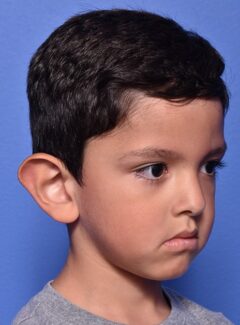
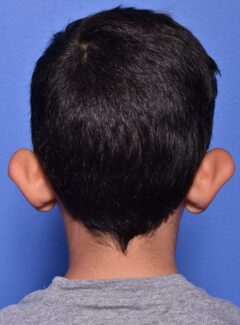
A prominent ear is one that is positioned much farther from the side of the head than what is considered a normal projection. This condition usually involves more than 20 mm of protrusion from the upper portion of the ear to the scalp. In newborn infants, prominent ear deformity is noted when projection is greater than 9 mm. As the most common congenital deformity among kids, prominent ears affect roughly 1 in 20 children. Many types of ear deformities can cause a prominent ear, including an enlarged conchal bowl and/or the loss of the antihelical fold. Constricted ear deformity and cup ear deformity are also considered examples of this condition.
What are the Benefits of Otoplasty?
Otoplasty is a cosmetic procedure that can be used to address a range of concerns related to the ears. The most common issue is large ears or prominence—when the ears protrude from the sides of the head at a greater angle than desired. Otoplasty can also modify the size, shape, and symmetry of the ears. Other benefits of this procedure include:
- Minimal downtime
- Minimal discomfort
- Enhanced confidence and self-esteem with regard to appearance
- Natural-looking results
Dr. Payne has extensive training and experience treating a wide range of ear deformities and abnormalities in adults and children, including prominent ears and other conditions. You can learn more about his techniques for incisionless otoplasty or non-surgical correction of infant ear deformities on our sister site.
Who is a Good Candidate For Otoplasty?
When protruding ears affect the psychological and social interactions of an adult or developing child, addressing the ear deformity with otoplasty and improving the appearance of the ears can help boost self-esteem and confidence. There are no physical health concerns for prominent ear deformity. However, peer interactions and teasing are legitimate reasons to correct large, asymmetrical, or protruding ears. The psychological effects of a deformed ear can potentially cause multiple problems at home, school, or work. Children with an ear deformity may experience several issues, such as bedwetting, poor performance in school, withdrawal from daily activities, bullying at school, fighting, and growing long hair to cover the ears.
Otoplasty can provide a more proportional look for patients who:
- Have nearly or fully completed ear growth (children over five years old)
- Have realistic expectations for the procedure
- Are relatively healthy to undergo surgery
Each patient’s treatment plan is created with their unique needs and goals in mind. If you have a newborn infant who was born with an ear deformity that did not self-correct, Dr. Payne also specializes in non-surgical infant ear molding to correct your child’s ear shape without incisions or invasiveness.
What is Involved in the Otoplasty Procedure?
Demonstration of an ear pinning procedure
An otoplasty procedure involves lifting the skin off the ear. The ear cartilage is then reshaped into a less prominent shape. This is accomplished by placing sutures and cutting the excess cartilage from behind the ear to achieve a more desirable appearance. This procedure is an outpatient procedure which is done under general anesthesia at an outpatient facility, or in some cases under light sedation and local anesthesia at our in-office operating room. Dr. Payne will discuss the approach that best suits your needs and goals during your initial consultation and will recommend any additional facial plastic surgeries such as a facelift or neck surgery, if needed, for a more enhanced appearance. There are several techniques available to adjust the angle of the ears. Some surgeons use techniques called double-incision otoplasty, single-incision otoplasty, and no-incision otoplasty (in rare cases). The details of your treatment plan will be discussed during your first meeting, and we welcome any questions or concerns you may have.
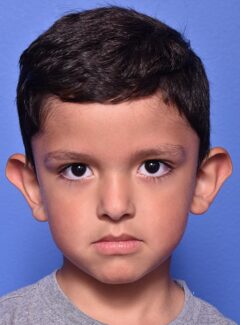
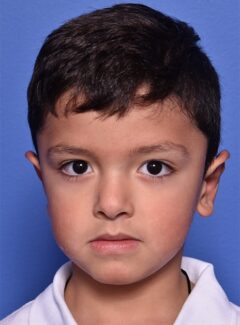
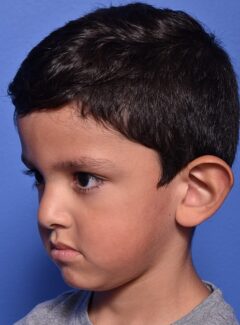
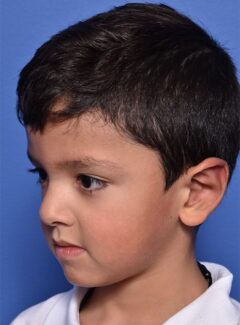
What is Otoplasty Recovery Like?
Most patients report little discomfort after the procedure, and we can provide some (age-appropriate) pain medication to help enhance you or your child’s experience. Most teens and adults can return to their normal schedule after a few days to a week. Children usually take a bit longer, approximately one week or two, and should be monitored during activities to ensure rough play and/or an accident don’t affect the results. Both children and adults should avoid strenuous exercise for about four weeks or more. After the procedure, a bandage will be placed over the ears, and a headband should be worn for a short period once the bandages are removed. The incisions behind the ear should heal well and be relatively unnoticeable over time.
How Long Do Otoplasty Results Last?
The results of ear correction surgery, such as otoplasty, are designed to last for a lifetime, as the framework of the ear is permanently enhanced to correct your ear deformity. Although the risk of complications after the surgical procedure is very low when patients are under the care of an experienced plastic surgeon, all procedures generally come with a chance of potential revision surgery. Otoplasty revision may be performed for patients who did not receive their desired results from another plastic surgeon. This may be due to a failure to repair the degree of ear projection enough (under correction), or the pinning of the ears too close to the sides of the head (overcorrection). Unfavorable scarring, sharp or unnatural edges, or earlobe deformities may also necessitate a secondary otoplasty procedure. Dr. Payne will fully discuss these issues with you during your consultation, and give you insight into the different otoplasty techniques used and what you can expect for the outcome of otoplasty. In general, patients at The Craniofacial and Plastic Surgery Center of Houston enjoy their otoplasty results indefinitely.
Is Non-Surgical Otoplasty Possible?
Correcting ear prominence without surgery unfortunately isn’t possible for older children and adults; however, infant ear molding with the state-of-the-art EarWell™ device can be very effective for newborns with an abnormal ear shape. In early infancy, the ear cartilage is very pliable; therefore, many ear deformities can be corrected using non-invasive techniques. This is most successful when treatment starts as early as possible — ideally within the first two weeks of life.
Infant ear molding involves using the EarWell™ device, which is made of soft plastic and silicone, to remold the ear(s) into the correct shape. This is done by keeping the ear mold in place for a period of six to eight weeks, effectively allowing the device to reconstruct the cartilage and soft tissue. Results can be very effective, with as many as 90 percent of children achieving successful correction of their outer ear deformity without the risks of anesthesia or surgery. In addition to avoiding cosmetic ear surgery, the cost is much less with ear molding procedures in the office. Dr. Payne specializes in infant ear molding and was trained under the inventor of the EarWell™, Dr. Steve Byrd.
Is Ear Surgery Safe for Children?
Yes, otoplasty is considered a safe treatment for children who are over the age of five, or who have reached the majority of ear maturation. That said, Dr. Payne will evaluate each child individually to determine whether they are a good candidate for ear reshaping surgery. When under the care of a plastic surgeon accredited by the American Board of Plastic Surgery (ABPS), otoplasty is considered an extremely safe and predictable procedure. In addition to being a board-certified plastic surgeon, Dr. Payne also specializes in craniofacial surgery and has decades of experience performing surgery of the head and neck for children and adults alike.
How Much Does Otoplasty Cost?
The cost of otoplasty typically includes a surgeon’s fee, anesthesia fee, and facility fee. Dr. Payne does not perform otoplasty ear procedures under local anesthetic in an office setting, as this can increase the risk of a poor result and infection. While the cost of surgery is impossible to assess without meeting you or your child in a consultation, our office can provide a personalized quote after your appointment with Dr. Payne. In some cases, medical insurance may be able to provide partial or full coverage for the procedure. Dr. Payne also accepts patient financing through CareCredit® and Prosper® Healthcare Lending for qualified patients who would rather pay for out-of-pocket costs in more manageable installments.
Will I Have an Otoplasty Scar?
Depending on your unique ear shape, otoplasty incisions are generally placed on the back surface of the ear or within the natural folds of the cartilage. In either case, scars from ear surgery typically remain inconspicuous and undetectable to outside observers. Dr. Payne will give you instructions on how to take care of your incisions after surgery to allow the best possible healing of your scars. With proper care, most otoplasty scars can lighten or fade over time.
Complements to Otoplasty
Otoplasty, or ear pinning surgery, is a procedure that promotes greater facial balance by making the ears more proportional in relation to the size of the head. At the Craniofacial and Plastic Surgery Center of Houston, Dr. Payne offers a range of other facial plastic surgery procedures designed to increase facial harmony and achieve a greater degree of balance between your features. If desired, Dr, Payne can speak with you about adjunctive treatment options including:
- Rhinoplasty: Nose recontouring surgery, or rhinoplasty, is one of the most popular facial procedures available. With the ability to correct form and/or function by reshaping the nasal framework, rhinoplasty can substantially improve your appearance through small, meticulous changes. Best of all, patients are able to maintain their natural beauty after rhinoplasty with little to no scarring.
- Chin Augmentation: Chin surgery can also be performed to enhance facial harmony and/or refine the jawline. For those who have a short or recessed chin, a custom chin implant can be placed to strengthen the facial profile and achieve a more proportional look. Other techniques include subtly advancing the chin bone to correct asymmetry.
Otoplasty is offered among a range of other cosmetic procedures designed to address signs of aging, reverse changes caused by pregnancy and nursing, and improve aesthetics. Don’t hesitate to speak with our physicians about the facial rejuvenation, body contouring, and breast enhancement services available to achieve your goals. For women who would like to restore their pre-baby contours, a Mommy Makeover can even combine multiple procedures to provide a more comprehensive transformation.
Choosing an Otoplasty Surgeon
Selecting the best otoplasty surgeon for you or your child can mean the difference between achieving the desired result and settling for a substandard outcome. Your plastic surgeon should ultimately be extensively trained and certified by the American Board of Plastic Surgery (ABPS), which can indicate a higher level of care and experience. A specialized focus in craniofacial plastic surgery, which is exclusively dedicated to treating structures of the skull and face, further emphasizes a distinguished level of otoplasty training.
Dr. Payne has worked with all types of ear deformities—not just prominent ears. He treats even the highly complex ear deformities that most plastic surgeons do not feel are easy to correct, such as constricted ear deformity, Stahl’s ear deformity, and lidding ear deformity. With his background in craniofacial surgery, he is able to address these deformities with added expertise and experience. He is a member of the American Society of Plastic Surgeons and is recognized as a leader in ear deformity surgery.
Additional Otoplasty FAQs
Does ear surgery hurt?
Dr. Payne takes great care to make you or your child’s experience as comfortable as possible. The procedure itself does lead to some soreness post-operatively. This discomfort will typically resolve in the first week. The pain from otoplasty ear surgery is usually minimal and controlled with over-the-counter Tylenol® or Motrin®. We can recommend some suggestions to manage any pain during your initial consultation.
Can you repair a split or torn earlobe?
If your earlobe is torn, stretched, or damaged due to piercings or an injury, Dr. Payne can often repair or improve the appearance of your ears. The best approach may vary depending on whether the issue is a new tear, accident, or an old piercing or wound. Dr. Payne will make an effort to close the wound, reposition or redistribute the tissue, and reshape the ear to create a more natural-looking result.
Can you reduce the size of the ears?
Ears that are overly large, but not prominent or protruding, may be reduced in size by modifying or removing cartilage through an incision made in the back of the ear where it meets the head; however, this technique may affect the shape of the ears. Dr. Payne can evaluate your concerns and help you determine which technique is capable of providing the result you seek.
Is otoplasty covered by insurance?
Otoplasty may not be applicable for insurance coverage if the ear deformity does not affect the ability to hear. That said, medical insurance varies for each patient and we encourage you to check with your provider to learn the terms of your policy. Financing plans are also accepted through CareCredit® and Prosper® Healthcare Lending, often making the procedure more affordable for qualified patients.
What otoplasty results can I expect?
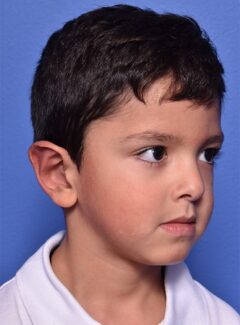
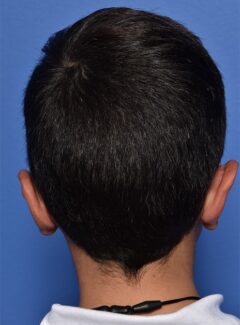
The final outcome will depend on the nature of your (or your child’s) ear deformity, but the ears should generally appear more balanced and proportional. The goal of surgery is to restore a more conventional and natural-looking ear appearance according to your needs and unique facial features. Dr. Payne will further explain what you can expect for your new ear shape when he meets you in a consultation.
What is otoplasty revision?
Otoplasty revision is a corrective surgery performed when a patient receives an unsatisfactory result from another plastic surgeon during their primary ear surgery. Reasons for revision ear surgery may include displeasure with the initial aesthetic result or complications that arose during the recovery period. Dr. Payne offers otoplasty revision for patients who would like to improve their original results and would be happy to discuss your concerns and goals with you during a consultation.
Are there any risks involved with otoplasty?
Every surgery carries a risk of infection, bleeding, and/or complications related to anesthesia. With otoplasty in particular, potential risks include the possibility of asymmetry, overcorrection, or changes in sensation. Sometimes, scarring can be significant in people who are prone to abnormal scarring. Like all procedures, the likelihood of adverse events is greatly minimized when you are under the care of a qualified plastic surgeon.
How should I sleep after otoplasty?
After otoplasty, patients should avoid sleeping on their sides to reduce pressure on the ears as much as possible. Once your bandages are removed, you will be provided with a loose-fitting headband to prevent your ears from pulling forward or folding over while asleep.
We understand if you have additional questions, and we’re here to help. Contact our practice today to learn more or to schedule a consultation with our physician.